A varied table beyond kebab
Turkish cooking brings together vegetables, pulses, grains, yogurt, olive oil, herbs and different meat or fish traditions. Geography matters: a coastal meal and a central Anatolian table need not use the same ingredients. Meze offers small dishes to share, while soups, breads and cooked vegetable dishes can be central parts of an ordinary meal.
Recognise different preparations
Döner is associated with meat cooked on a rotating spit; lahmacun uses a thin base with a seasoned topping; börek uses layered pastry with varied fillings. Mantı brings filled dough and yogurt, while köfte refers to several seasoned minced preparations. Dolma and sarma distinguish stuffing and wrapping traditions. Menemen, pilav and lentil soup add further everyday options; names alone do not establish vegetarian or allergen suitability.
Sweets and drinks have their own traditions
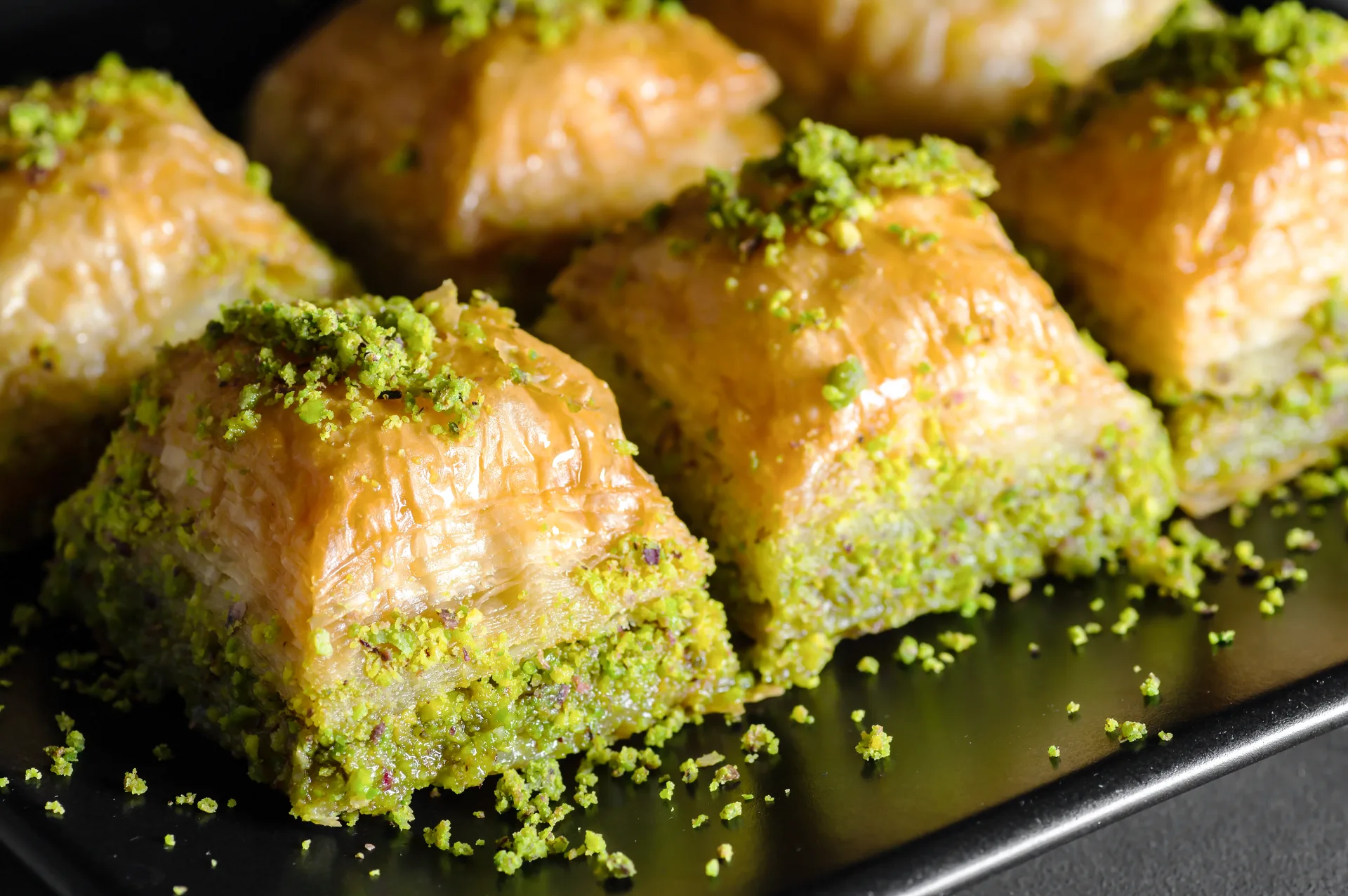
Baklava combines fine pastry layers, nuts and syrup; lokum has a different confectionery texture. Dondurma, coffee, tea and ayran introduce further tastes and serving customs. A tasting should allow time to understand preparation and regional variation, rather than treating every sweet or beverage as the same national product.
Plan meals around individual needs
State allergies, dietary requirements and whether you want a culinary visit or simply appropriate meals during a tour. Confirm ingredients with the actual kitchen: yogurt, nuts, pastry and broth can appear in dishes that otherwise seem suitable. A food reference does not imply an included restaurant meal, cooking class or alcoholic drink.