From early settlements to classical cities
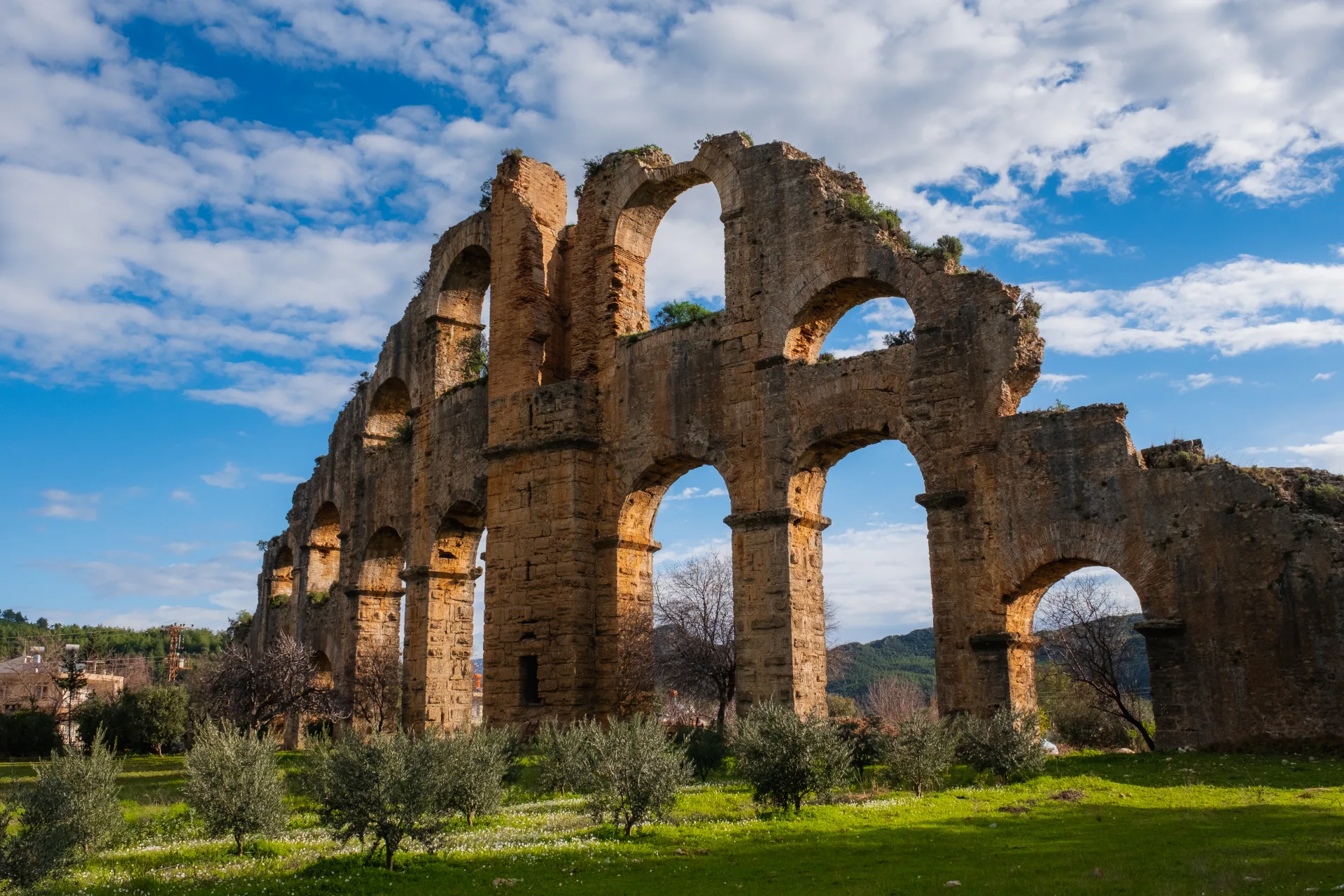
Göbekli Tepe, Çatalhöyük and the Hittite capital Hattusa introduce very different early building traditions: monumental stone, domestic settlement and fortified urban organisation. Avoid calling every early site a temple or the world’s first city. Greek and Roman remains then reveal theatres, agoras, temples, baths, streets and water infrastructure, with examples at Ephesus, Pergamon, Aspendos and Hierapolis.
Byzantine, Armenian and Seljuk traditions
Istanbul’s Hagia Sophia demonstrates a major domed Byzantine interior and successive changes of use. Ani and Akdamar add Armenian architectural contexts farther east. Seljuk buildings offer carved portals, geometric decoration, madrasas and caravanserais: Konya, Sultanhanı and Divriği are useful references, with each monument understood in its own setting.
Ottoman cities and changing tastes
Bursa and Edirne help explain earlier Ottoman centres; Istanbul’s imperial mosque complexes show later monumental development. Sinan’s work connects structure, domes, light and the wider social complex. Timber houses in Safranbolu or Amasya add domestic architecture. Dolmabahçe and Çırağan reveal a later palace vocabulary, while Bosphorus yalı mansions express waterfront residential culture.
Republican and contemporary perspectives
Anıtkabir in Ankara provides a Republican monumental reference. Railway stations, civic buildings and modern districts add other periods to a route often focused only on older monuments. Compare materials, purpose and later adaptation; viewing an exterior and entering a functioning building have different access conditions.