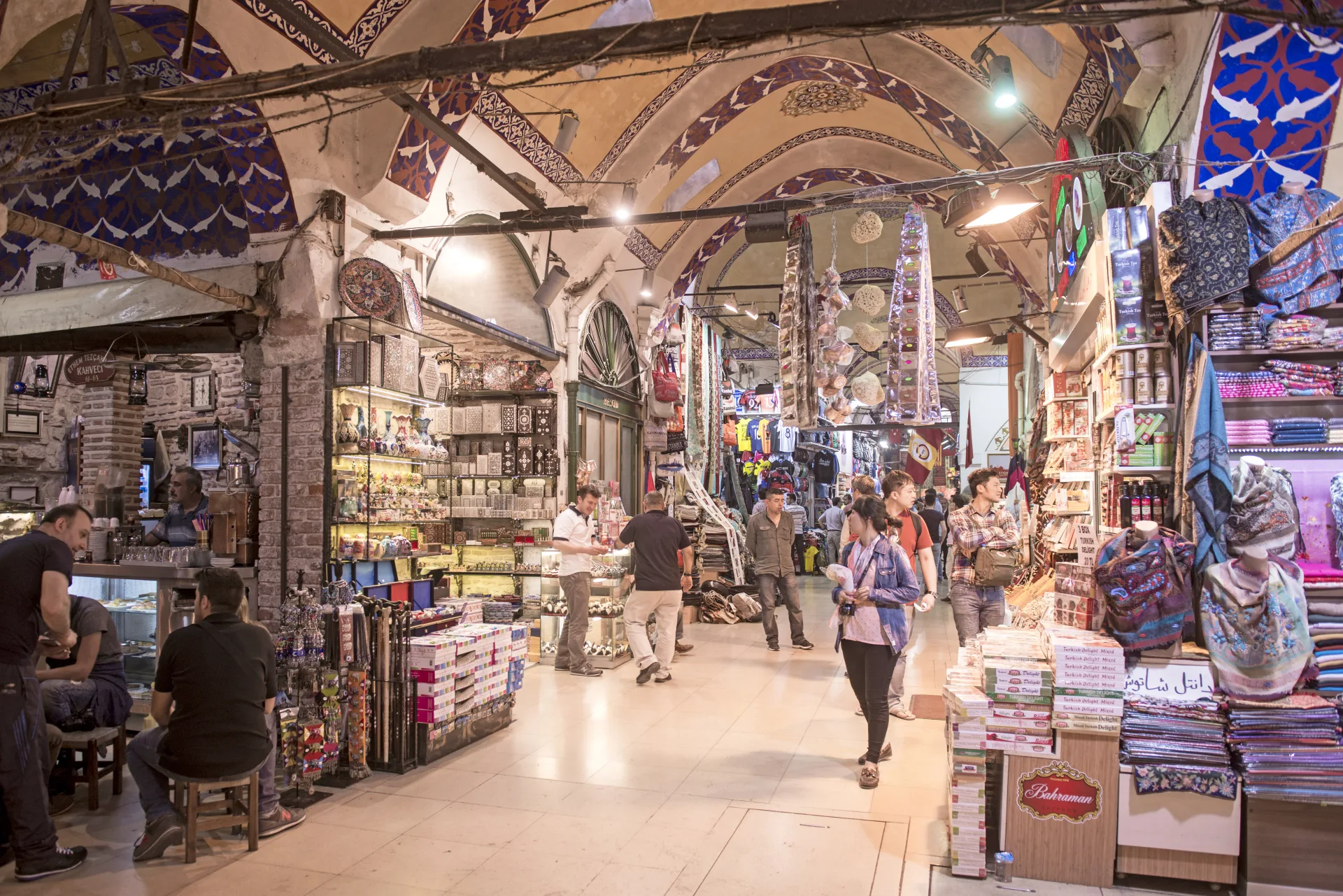
The Grand Bazaar (Kapalıçarşı, "the covered market") is one of the oldest and largest covered markets in the world. Its vaulted streets, lined with thousands of shops, have been the commercial heart of Istanbul since the fifteenth century. You can come to shop, but it is just as rewarding to come to look: at the painted ceilings, the old caravanserais hidden behind the main lanes and the craftsmen who still work in them. A visit never requires buying anything. This guide explains how the bazaar is organised and how to enjoy it.
Five centuries of trade
Soon after the conquest of 1453, Sultan Mehmed II built a stone hall with heavy iron doors, the Cevahir (or Old) Bedesten, to store and sell valuable goods such as jewellery, weapons and fine textiles. A second hall, the Sandal Bedesten, followed, and the streets between them were gradually roofed over. Over the centuries the market grew into a covered district of roughly sixty streets and around four thousand shops, with mosques, fountains, cafés and dozens of entrances. It has survived fires and the earthquake of 1894, and has been restored several times.
How the bazaar is laid out
Although it can feel like a labyrinth, the bazaar has a simple structure. Its main street, Kalpakçılar Caddesi, the street of jewellers, runs from the Beyazıt Gate towards the Nuruosmaniye Gate, and many side streets still carry the names of the trades once practised there. The Old Bedesten sits at the centre and specialises in antiques, silverware and collectors' pieces.
- The hans. Around the edges are the hans, former caravanserais built around courtyards, where merchants once lodged and stored goods. Some, such as the Zincirli Han, are quiet and photogenic; others, like the Büyük Valide Han, still house workshops.
- Cafés. Small tea and coffee houses inside the bazaar make good meeting points and a welcome break.
What you will find
The bazaar is not one workshop or one uniform range of goods, and each craft rewards a different kind of attention:
- Textiles. Carpets, flat-woven kilims, embroidered suzanis, silk scarves and hand-woven cotton towels (peştemal).
- Ceramics and tiles, many painted with İznik-style floral designs.
- Lamps of coloured glass mosaic, which light up whole shopfronts.
- Jewellery, gold and silver, from the jewellers' street to the silversmiths of the Old Bedesten.
- Leather goods and copperware, from jackets and bags to copper trays and coffee pots.
- Small souvenirs such as olive-oil soaps and the blue evil-eye beads (nazar boncuğu) believed to ward off bad luck.
Shopping without stress
- Bargaining. Haggling is normal for carpets, souvenirs and many crafts, much less so for gold and branded goods. Take your time, compare a few shops and agree the price before discussing payment. A friendly, unhurried conversation usually works better than a hard line.
- Quality. Prices vary with quality. Ask about materials, dimensions and how the piece was made: a hand-knotted carpet, a flat-woven kilim and a printed textile can share the same colours but are made in completely different ways. Our guide to Turkish carpet traditions and regional styles explains knots, dyes and the difference between carpets and kilims.
- Paperwork. Ask for an invoice, and for a certificate for antiques, gold or valuable items. Some shops offer tax-free shopping for non-residents; ask before paying. Check customs rules in your own country for antiques and large purchases.
- Packing and shipping. Ask how fragile items will be packed for your flight. If you buy a large carpet, confirm in writing how and when it will be shipped, and what insurance covers it.
Practical information
- Opening days. The Grand Bazaar is closed on Sundays and during the main religious holidays. Saturdays are busy; weekday mornings are the calmest time.
- Getting there. Take the T1 tram to Beyazıt–Kapalıçarşı or Çemberlitaş. The Nuruosmaniye Gate is a five-minute walk from Çemberlitaş, and the bazaar is about fifteen minutes on foot from Sultanahmet.
- Finding your way. Note the number or name of the gate you enter by and pick a landmark, such as the Old Bedesten, as a meeting point. Maps are posted at the main entrances.
- Time needed. One hour gives a first impression; two to three hours let you explore the hans and shop calmly. If shopping is a priority on a guided day, check that the programme leaves dedicated browsing time.
- Keep valuables close. As in any crowded market, keep your bag closed and your wallet out of sight.
From the Grand Bazaar to the Spice Bazaar
From the Mahmutpaşa side of the bazaar, a lively street of local shops runs downhill towards Eminönü. In about fifteen to twenty minutes you reach the Spice Bazaar, built in the seventeenth century as part of the New Mosque complex, with its spices, dried fruit, teas and Turkish delight. Walking from one market to the other is one of the most enjoyable ways to see everyday life in the old city. For the history behind the crafts you will see, read our guide to Turkish art and crafts.
Frequently asked questions
Is the Grand Bazaar only for shopping?
No. Its architecture, hans and workshops make it worth visiting even if you buy nothing.
Is it open on Sundays?
No, the Grand Bazaar is closed on Sundays. The Spice Bazaar and the surrounding streets are often open, but check before you go.
Is it better to visit with a guide?
A guide helps you find the historic hans and quieter corners and explains how the market works. Your shopping decisions always remain your own.
Tours that include the Grand Bazaar
The Grand Bazaar is part of the Old City Tour. For a deeper look at crafts, see Istanbul textiles, kilims and making traditions or arrange private shopping and design appointments. If you would rather taste than shop, the private Istanbul street food walk explores the neighbourhoods around the markets, and how many days to spend in Istanbul helps you fit it all in.